This information is from the AMERICAN WOMAN cookbook published in 1940
QUICK BREADS
Quick breads are those breads or bread-like mixture which are made up and baked at once. The essentials of quick breads are a liquid and flour. When leavening agents are used they act quickly and make the mixture light without a long period of waiting.
Quick breads maybe improved in flavor and texture by the addition of salt, sugar,eggs, shortening , etc., in various combinations and proportions. Shortening and eggs contributes liquid to the mixture , which explains apparent discrepancies in proportions given in various recipes of quick breads.
Ready to use flours----Prepared flours which contain leavening and other ingredients require only milk or water to make excellent griddle cakes. The addition of eggs and shortening produces a batter suitable for muffins, waffles and quick breads.
TYPES OF QUICK BREADS
There are four types of quick breads---the pour batter, the drop batter, the soft dough and the stiff dough; the latter is seldom used.
THE POUR of Thin batter will pour easily from a spoon or pitcher and can vary in degree of thinness. The breakfast puff and the popover mixtures are examples of the thinnest batter, while the griddle-cake and the waffle mixtures are examples of a thicker pour batter.
THE DROP, or THICK batter does not pour readily, but drops in a soft moist mass from a spoon or must be shaken or helped free from it. Muffins and fritters are examples of the drop batter.
THE SOFT DOUGH can be handled more or less easily. Biscuits and some cookies mixtures are examples of the soft dough..( oooo cookies)
THE STIFF DOUGH can be handled easily, and some force must be used to roll it out. The Southern beaten biscuits and noodles are examples of the stiff dough.....
APPROXIMATE PROPORTIONS of LIQUIDS to FLOUR in MAKING QUICK BREADS
Pour or thin batter---use 1cup of liquid with 1-1 1/2 cups flour
DROP OR THick batter---use 1 cup liquid to 1 1/2 -2 cups flour
SOFT dough--use 1 cup liquid with 2 -2 1/2 cups flour
STIFF dough---use 1 cup liquid with 4-5 cups flour
METHODS OF MIXING QUICK BREADS
MUFFIN Method---This method is usually used for the batter type of quick breads. The dry ingredients are mixed and sifted, then the liquid and egg( if used) are added, either separately or combine. When well mixed, the melted shortening is beaten in.( Love muffins)
CAKE Method---This method is used for the richer muffins. The shortening is creamed, the sugar is stirred in , then the beaten egg added. The rest of the ingredients are mixed and sifted and added gradually to the first mixture alternately with the liquid.( yummy ,I love cake.....)
BISCUIT Method---The dry ingredients are mixed and sifted and the shortening cut in with knives or worked in with the tips of the fingers, it being necessary to keep the fat hard until the dough goes into the oven. If the shortening becomes warm, or is melted, the result is not flaky and flakiness should be a characteristic of biscuits( inclue gravy with this and im there)
POPOVER Mixtures should be thoroughly beaten with an egg-beater for several minutes ,in order to introduce as much air as possible and to break the liquid present into tiny droplets. The mixture being very thin, will not hold air very long, so it should be poured iummediately into the baking containers, which maybe of tin, glass, aluminum, earthenware, iron or steel. If metal containers are used, they should be hot when the batter is poured into them so that the baki ng may begin as soon as the pans are put into oven. A hot oven is needed at first and until batter has risen to full height, then the temp should be reduced in order to prevent burning.
FOR GRiddle -cakes and WAFFLES the griddles and irons should stand perfectly level; then if the batter is poured steadily from a pitcher or from the tip of a large spoon it will spread itself evenly.
Muffin mixtures and Similar batters should be stirred and beaten only enough to combine ingredients thoroughly and produce smoothness of texture. The muffins should be baked at once.
SOFT dough should be handled as little as possible and kneaded only enough to make a smooth surface, free from dry flour. Much kneading develops a stretchiness in the dough which detracts from the flakiness. The dough should be rolled or patted out to 1/2 inch or more in thickness if thick, soft biscuits are desired, or rolled out to 1/4 inch in thickness if thin, crusty biscuits are desired. The biscuits ahould be baked at once.
BAKING TEMPS FOR QUICK BREADS
All quick breads should be baked in a moderate to hot oven ( 350-460 degrees)
* Remember this was published in 1940....
Monday, July 9, 2018

Sunday, July 8, 2018
Characteristics of a Good loaf of Bread
This is again from the American Woman cookbook published in 1940
CHARACTERISTICS of a GOOD LOAF of A BREAD
Size and shape--- A medium -sized loaf made of dough weighing from one pound to one and 1/4 pounds costs less to bake is more likely to be thoroughly baked than a very large loaf. A moderate-sized loaf is about 4-5 inches deep, 8 -9 inches long and 4-5 inches wide.
The careful shaping of the dough is the first step necessary in making a well-shaped loaf of bread.
COLOR---Bread should have a good bloom and be golden brown in color with a depth of crust on top, bottom and sides. The crumb should be cream-white in color with no dark streaks through it. A grayish color indicates poor flour or poor handling of the dough.
TEXTURE---Nothing is more difficult to descrive than texture, nothing more indicative of quality. Perfect texture of the crumb depends on kneading the dough until it is smooth and out sticking. It depends on having the dough rise to double or treble its size once or twice before it it made into the loaf and once in the tins . It depends on careful baking. To determine the texture of the crumb, cut the loaf in two. The holes should be small and uniform with not streak near the bottom of the loaf and no lump through the loaf. Press center of the loaf with the knuckles; if the elasticity and moisture are right, the loaf should spring back to shape.
The crust should be smooth without large holes on the bottom and without a split on one side of the loaf. If the top crust is rough it may be due to insufficient kneading or to putting the dough into the tins before it perfectly smooth.
FLAVOR AND ODOR---A well-made, well baked loaf will taste slightly sweet, neither too fresh nor too salty, and will have no suggestion of acidity, rawness or mustiness.
COMMON CAUSES of INFERIOR BREAD
POOR FLOUR---c A cheap flour is an expensive flour because it makes a loaf inferior in texture , color flavor and volume.
OLD YEAST----Dead yeast plants can not leaven beard. Old compressed-yeast cakes or dry which has been stored away until many of the yeast plants are dead will act very slowly if at all and will not give best results.
TOO MUCH OR TOO LITTLE KNEADING---Over-kneaded dough becomes sticky and will not rise well in the oven. Under-kneaded dough makes streaked bread, poor in texture, which sometimes contains lumps that might have been worked out in the kneading.
TOO MUCH FLOUR---- Too stiff a dough rises very slowly and therefore often is not allowed to rise sufficiently. This is a green dough and produces a loaf with poor flavor.
OVER-RISING----Too long rising fives a very porous loaf with little flavor, a pale crust and a porous crumb with broken, irregular cells. This bread crumbles badly. If rising continues too long, the bread is sour.
UNDR-RISING---This gives a bread a dark crust which blisters just under the crust. The loaf is small and flat. It browns easily in the oven. Such dough is said to be green.
TOO COOL an OVEN---Bread will continue to rise too long in oven temp is too low. The result is bread that is very porous in the center and upper part of the loaf.
TOO HOT an OVEN----the dough crusts over immediately and can not continue to rise the first 10-15 minutes it is in the oven, or the crust may break as it is forced up---usually on one side more than the other. The crust becomes very brown while center is underdone.
ROPE IN BREAD-- This appears during hot, damp weather. It is due to the presence of bacillus and the ropy, is stringy quality does not develop immediately after the bread is baked. Rope gives bread a very disagreeable odor and makes it unfit for use.
If rope develops all utensils used in making bread and containers in which bread is stored should be sterilized with boiling water. Vinegar equal to two per cent.of the amount of flour used should be added to all bread made until the supply of flour is exhausted. This is approximately one-half ounce ( one Tablespoon)_ of vinegar to one and half pounds of flour.
MOLD--Bread wrapped while hot molds quickly. Containers used for storing bread should be washed and aired frequently, and immediately if mold is fold.
CARE OF BREAD AFTER BAKING
Bread should be removed from the tins as soon as it is taken from oven, and placed on racks or crosswise of the tins so that air can circulate on all sides of it. Quick cooling prevents loss of moisture.
VARYING from RECIPES in MAKING BREAD
Water maybe substituted for milk in all bread recipes. This is not always desirables, however, as one purpose of milk is to increase the nutritive value of bread.
In recipes using compressed yeast, one cup of potato yeast ,maybe substituted for one cake compressed or dry yeast. When potato yeast is used it is necessary to use a little more flour.
* Remember that this was in a 1940 published book....something are the same, some are not...
CHARACTERISTICS of a GOOD LOAF of A BREAD
Size and shape--- A medium -sized loaf made of dough weighing from one pound to one and 1/4 pounds costs less to bake is more likely to be thoroughly baked than a very large loaf. A moderate-sized loaf is about 4-5 inches deep, 8 -9 inches long and 4-5 inches wide.
The careful shaping of the dough is the first step necessary in making a well-shaped loaf of bread.
COLOR---Bread should have a good bloom and be golden brown in color with a depth of crust on top, bottom and sides. The crumb should be cream-white in color with no dark streaks through it. A grayish color indicates poor flour or poor handling of the dough.
TEXTURE---Nothing is more difficult to descrive than texture, nothing more indicative of quality. Perfect texture of the crumb depends on kneading the dough until it is smooth and out sticking. It depends on having the dough rise to double or treble its size once or twice before it it made into the loaf and once in the tins . It depends on careful baking. To determine the texture of the crumb, cut the loaf in two. The holes should be small and uniform with not streak near the bottom of the loaf and no lump through the loaf. Press center of the loaf with the knuckles; if the elasticity and moisture are right, the loaf should spring back to shape.
The crust should be smooth without large holes on the bottom and without a split on one side of the loaf. If the top crust is rough it may be due to insufficient kneading or to putting the dough into the tins before it perfectly smooth.
FLAVOR AND ODOR---A well-made, well baked loaf will taste slightly sweet, neither too fresh nor too salty, and will have no suggestion of acidity, rawness or mustiness.
COMMON CAUSES of INFERIOR BREAD
POOR FLOUR---c A cheap flour is an expensive flour because it makes a loaf inferior in texture , color flavor and volume.
OLD YEAST----Dead yeast plants can not leaven beard. Old compressed-yeast cakes or dry which has been stored away until many of the yeast plants are dead will act very slowly if at all and will not give best results.
TOO MUCH OR TOO LITTLE KNEADING---Over-kneaded dough becomes sticky and will not rise well in the oven. Under-kneaded dough makes streaked bread, poor in texture, which sometimes contains lumps that might have been worked out in the kneading.
TOO MUCH FLOUR---- Too stiff a dough rises very slowly and therefore often is not allowed to rise sufficiently. This is a green dough and produces a loaf with poor flavor.
OVER-RISING----Too long rising fives a very porous loaf with little flavor, a pale crust and a porous crumb with broken, irregular cells. This bread crumbles badly. If rising continues too long, the bread is sour.
UNDR-RISING---This gives a bread a dark crust which blisters just under the crust. The loaf is small and flat. It browns easily in the oven. Such dough is said to be green.
TOO COOL an OVEN---Bread will continue to rise too long in oven temp is too low. The result is bread that is very porous in the center and upper part of the loaf.
TOO HOT an OVEN----the dough crusts over immediately and can not continue to rise the first 10-15 minutes it is in the oven, or the crust may break as it is forced up---usually on one side more than the other. The crust becomes very brown while center is underdone.
ROPE IN BREAD-- This appears during hot, damp weather. It is due to the presence of bacillus and the ropy, is stringy quality does not develop immediately after the bread is baked. Rope gives bread a very disagreeable odor and makes it unfit for use.
If rope develops all utensils used in making bread and containers in which bread is stored should be sterilized with boiling water. Vinegar equal to two per cent.of the amount of flour used should be added to all bread made until the supply of flour is exhausted. This is approximately one-half ounce ( one Tablespoon)_ of vinegar to one and half pounds of flour.
MOLD--Bread wrapped while hot molds quickly. Containers used for storing bread should be washed and aired frequently, and immediately if mold is fold.
CARE OF BREAD AFTER BAKING
Bread should be removed from the tins as soon as it is taken from oven, and placed on racks or crosswise of the tins so that air can circulate on all sides of it. Quick cooling prevents loss of moisture.
VARYING from RECIPES in MAKING BREAD
Water maybe substituted for milk in all bread recipes. This is not always desirables, however, as one purpose of milk is to increase the nutritive value of bread.
In recipes using compressed yeast, one cup of potato yeast ,maybe substituted for one cake compressed or dry yeast. When potato yeast is used it is necessary to use a little more flour.
* Remember that this was in a 1940 published book....something are the same, some are not...
Saturday, July 7, 2018
Blueberry pancakes
You didn't think you would 1001 get a recipe today did ya? .....Well ya is/are what ever don't know the correct English...so take it as it is.....
This recipe is from the 1001 muffin cookbook, I don't think I need to go thru the loooonnnngggg title again do I or do I need to....( 1001 muffins ,Biscuits, Doughnuts, Pancakes, Waffles, Popovers, Fritters, Scones and other quick breads, just in case ya don't know)
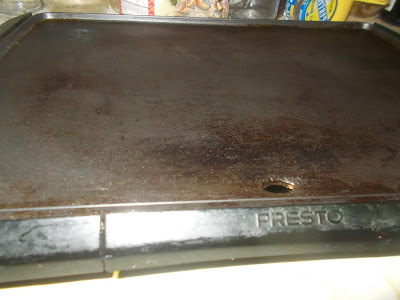
Preheat your Griddle ( a good idea)


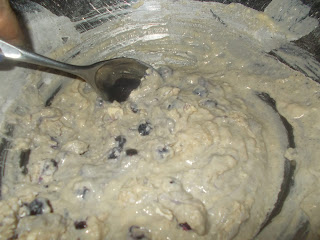


This recipe is from the 1001 muffin cookbook, I don't think I need to go thru the loooonnnngggg title again do I or do I need to....( 1001 muffins ,Biscuits, Doughnuts, Pancakes, Waffles, Popovers, Fritters, Scones and other quick breads, just in case ya don't know)

Preheat your Griddle ( a good idea)

Lets mix the dry ingredients;
1 cup all-purpose flour
1 Tablespoon granulated sugar
1 1/2 teaspoons baking powder
1/4 teaspoon ground cinnamon
3/4 cup blueberries( I think I only added 1/4 cup of them, ooopps my boo-boo)
1/2 teaspoon salt

according to the book, I noticed that the egg is separated, but
in the directions the egg is separated, so I didn't separated
In medium bowl
beat 1 egg until frothy, I meant foamy
Beat in
3/4 cup milk
2 Tablespoons butter or margarine , melted

Mix both wet and dry ingredients together
just until moisten
Brush griddle with oil or
maybe butter or margarine

drop batter by spoon on griddle

now let them sizzle/cook

once they start bubbling on the side up
flip them
brown on the other side

then Enjoy with syrup or fresh fruit or
any way ya eat pancakes
with a cup of hot coffee or tea
ENJOY!
Yeast bread making...3
This more from the American Woman cookbook published in 1940.
GENERAL DIRECTIONS IN MAKING BREAD
Scald all liquids to ensure destruction of micro-organisms which might interfere with action of the yeast plant.
Add fat, sugar and salt to the hot liquid and let it cool until it is lukewarm.
Add yeast cake , softened in a small amount of water to which 1 teaspoon of sugar maybe added.
Add the flour , sifted before measuring, except for graham and whole wheat flours, which are measured before they are sifted. There are two methods of flour into the dough.
SPONGE METHOD
Add 1/2 of the flour to the liquid-and-yeast mixture and beat thoroughly. Set in a warm place. When the batter is light , add remaining flour, or enough to make a dough of the desired stiffness, and knead thoroughly until it no longer sticks to board.
STRAIGHT DOUGH METHOD
Add to the liquid -and-yeast mixture all the flour to be used or enough to make a dough to make a dough of the desired stiffness and knead thoroughly until it no longer sticks to the board. This method may always be used with compressed yeast.
KNEADING dough ----Press the dough away with the palms of your hands. Stretch the dough from the edge, folding the back edge over to the center. Press the dough away with the palms of your hands, exerting sufficient force to cause the part folded over to adhere to the mass under it, and repeat folding. Turn dough 1/4 around and repeat kneading. Continues turning, folding and kneading until dough is smooth and elastic and will not stick to an unfloured board.
FIRST RISING of DOUGH---Remove dough from receptacle, bring the top around the under side and fold edges together. This leaves a ball-shaped mass, round and smooth on the smooth on the upper surface. Bread carefully shaped in this way seems to give a better product than seamy rough dough. Put back in receptacle. Grease the dough, cover the receptacle . return to warm place to rise again. This second rising is not essential but is worth while because it improves both the texture and the flavor of the bread.
SHAPING INTO LOAVES---- Shape by folding the sides of a piece of the dough under while pressing the dough so as to lengthen it. The top should be kept perfectly smooth and the only crease in the dough should be on the underside as the loaf us placed in the tin. If a soft crust is desired, grease the dough. To braid, cut into 3, roll lengthwise, pinch together at one end, and proceed. Cover and allow to rise until double its bulk.
BAKING BREAD----A loaf of average size should bake from 50 to 60 minutes at a beginning temp of about 400 degrees. After 15 or 20 minutes, the temp of the oven maybe reduced. A moderate heat for 60 minutes. produces better bread than a hot oven for 30 minutes.
The baking process maybe divided into 4 periods:
First 15 minutes the dough should continue to rise.
Second 15 minutes the dough should crust over and brown slightly.
Third 15 minutes the center of the loaf should bake and the crust continue to brown.
Fourth 15 minutes the loaf should shrink from the sides of the tin and should be browned evenly over its entire surface. It should have a hollow sound when tapped.
Bread is baked to complete the rising ,kill the yeast plants, drive off carbon dioxide and alcohol , dextrinize the crust, harden the cell walls of the crumb and develop the desired flavor.
TESTS for DETERMINING when BREAD is DONE
1. When the color is a rich golden brown.
2. When the loaf shrinks away from the sides of the pan.
3. When the sides of the pan sizzle when touched with a damp finger.
4. When a clean toothpick inserted comes out free from any particles of the dough
5. When the loaf gives a hollow sound on being tapper.
GENERAL DIRECTIONS IN MAKING BREAD
Scald all liquids to ensure destruction of micro-organisms which might interfere with action of the yeast plant.
Add fat, sugar and salt to the hot liquid and let it cool until it is lukewarm.
Add yeast cake , softened in a small amount of water to which 1 teaspoon of sugar maybe added.
Add the flour , sifted before measuring, except for graham and whole wheat flours, which are measured before they are sifted. There are two methods of flour into the dough.
SPONGE METHOD
Add 1/2 of the flour to the liquid-and-yeast mixture and beat thoroughly. Set in a warm place. When the batter is light , add remaining flour, or enough to make a dough of the desired stiffness, and knead thoroughly until it no longer sticks to board.
STRAIGHT DOUGH METHOD
Add to the liquid -and-yeast mixture all the flour to be used or enough to make a dough to make a dough of the desired stiffness and knead thoroughly until it no longer sticks to the board. This method may always be used with compressed yeast.
KNEADING dough ----Press the dough away with the palms of your hands. Stretch the dough from the edge, folding the back edge over to the center. Press the dough away with the palms of your hands, exerting sufficient force to cause the part folded over to adhere to the mass under it, and repeat folding. Turn dough 1/4 around and repeat kneading. Continues turning, folding and kneading until dough is smooth and elastic and will not stick to an unfloured board.
FIRST RISING of DOUGH---Remove dough from receptacle, bring the top around the under side and fold edges together. This leaves a ball-shaped mass, round and smooth on the smooth on the upper surface. Bread carefully shaped in this way seems to give a better product than seamy rough dough. Put back in receptacle. Grease the dough, cover the receptacle . return to warm place to rise again. This second rising is not essential but is worth while because it improves both the texture and the flavor of the bread.
SHAPING INTO LOAVES---- Shape by folding the sides of a piece of the dough under while pressing the dough so as to lengthen it. The top should be kept perfectly smooth and the only crease in the dough should be on the underside as the loaf us placed in the tin. If a soft crust is desired, grease the dough. To braid, cut into 3, roll lengthwise, pinch together at one end, and proceed. Cover and allow to rise until double its bulk.
BAKING BREAD----A loaf of average size should bake from 50 to 60 minutes at a beginning temp of about 400 degrees. After 15 or 20 minutes, the temp of the oven maybe reduced. A moderate heat for 60 minutes. produces better bread than a hot oven for 30 minutes.
The baking process maybe divided into 4 periods:
First 15 minutes the dough should continue to rise.
Second 15 minutes the dough should crust over and brown slightly.
Third 15 minutes the center of the loaf should bake and the crust continue to brown.
Fourth 15 minutes the loaf should shrink from the sides of the tin and should be browned evenly over its entire surface. It should have a hollow sound when tapped.
Bread is baked to complete the rising ,kill the yeast plants, drive off carbon dioxide and alcohol , dextrinize the crust, harden the cell walls of the crumb and develop the desired flavor.
TESTS for DETERMINING when BREAD is DONE
1. When the color is a rich golden brown.
2. When the loaf shrinks away from the sides of the pan.
3. When the sides of the pan sizzle when touched with a damp finger.
4. When a clean toothpick inserted comes out free from any particles of the dough
5. When the loaf gives a hollow sound on being tapper.
Friday, July 6, 2018
Yeast-Bread making..ingredients 2....
I know I should have posted this at the beginning of my very own bread challenge. But , I have started looking at some of my collection of cookbook, cooking magazines and came across this .
This post kinda of gives an insight into bread, both yeast and quick breads...This infor I found in THE AMERICAN WOMAN COOKBOOK copyrighted in the year 1940.Might I had some of this is as true today as it was back then...This will be a long post....so be warned...
so here it goes......
Yeast bread....
Bread as a universial article of food has much favor, ( who doesn't love bread)...Bread is usually included in most meals...or at least one form of it...Flour , its chief ingredient, is not quickly perishable and is rather easily stored and transported. I store my flour in an canister and the different varieties are stored in the freezer. Bread is mild in flavor,is inexpensive and furnishes material needed by the human machine.
Excellent bread can be made of good bread flour, salt, water and yeast. Better bread can be made if sugar and fat are added. It is the handling of the dough, not in the proportions of ingredients, that much bread is made.
Flour and Meals used in Bread-making
While flours and meals made from oats, corn ,rice and other seeds are used to some extent with wheat flour in making yeast breads, by far the larger amount of yeast bread is made from wheat flour only and most of it is made from highly refined white flour. This is because the gluten of wheat
flour possesses properties of toughness and elasticity which enable dough containing it to stretch and hold gases produced by it by the action of the yeast or introduced by it by baking powder. The dough rises and becomes light.
However the quality of the wheat flour depends upon the season in which it is grown. Winter wheat is sown in the fall ,but remain in the ground all winter and is harvested in the summer. This grain is
generally poor in gluten ( some people are allergic), but rich is starch. Winter wheat is used largely for pastry flour. Spring wheat is sown in the spring and is harvested in the summer at about the same time as the winter wheat. The grain is generally rich in gluten but poor in starch. Spring wheat flours are best for bread making. Standard flours are a mixture of spring and winter wheat, and vary little in quality.
In selecting a flour for bread-making every effort should be made to secure a flour of good bread-making properties. Bread flour, when rubbed between fingers ,has a granular feeling. It will not hold its shape when pressed in hand. Bread flour can be used successfully in making cakes and pastries( mmmmmmm goodddddd.)
A good pastry flour( pies, doughnuts and such) differs from bread flour in containing more starch and not only less gluten but less elastic gluten than bread flour. It has an oily feeling when rubbed between the fingers, and holds its shape when pressed in hand. Pastry flour can not be used successfully in making bread.
PROPORTIONS OF FLOUR AND LIQUID IN DOUGH
For 1 cup of liquid use approximately 3 cups of flour. This proportion varies widely because of differences in the absorptive powers of different flours. A good bread flour will take up more water than a poor bread flour. Flour, except graham or whole wheat, should always be sifted before being measured.
YEAST
The most satisfactory temp. for the growth of yeast is from 75 to 95 degrees. it ceases to grow when temps are below 30 degrees and is killed at 212 degrees. Yeast should not be softened in very cold water if immediate activity is desired.
COMPRESSED YEAST-- A cake of fresh compressed yeast breaks with a clean edge and has no odor of putrefaction . It is creamy yellow and uniform in color. When old, compressed yeast becomes slightly slippery, is streaky, and has unpleasant odor. Only fresh compressed yeast should be used in bread-making. In compressed yeast, the yeast plants are alive and ready for action, hence, bread-making with compressed yeast requires less time than with dry yeast.
DRY YEAST-- Dry yeast is a mass of yeast plants mixed with cornmeal and dried. As yeast will live for some time and yet can not grow without moisture, these dry cakes will keep for many weeks. The dried plants are inactive and even when warmth and moisture, food and air supplied, they take some time to become active again.
LIQUID,RAILROAD or STARTER YEAST-- This consists of potato water, sugar, and salt in which the yeast plants are in active condition. The starter must b e stored in a cool temperature to retard the action of the yeast. The disadvantage of liquid yeast lies in the fact that other yeasts than those best suited for bread-making may be thriving there also, and soon bread made from this perpetual yeast may a characteristic flavor. Starter should be thrown out occasionally and remade with a fresh yeast cake.
AMOUTS OF YEAST
from one-sixth of a cake to four cake of compressed yeast maybe used to one cup liquid in making bread. The amount of yeast within this range does not affect the flavor of the bread if the dough is handled properly. With the minimum amount of yeast. the process will take 6 hours or more; with skillful handling, be completed in one hour and twenty minutes. From 2 Tablespoon to one cup of liquid yeast maybe used for each loaf of bread.
METHODS OF USING YEAST
Compressed or dry yeast should be softened is from 1/4 to 1/2 cup luke-warm water to which 1 teaspoon of sugar has been added. The compressed yeast maybe used immediately. The dry yeast maybe set aside in a warm place for an hour before it is added to the batter.
LIQIUDS FOR BREAD-MAKING
All liquids should be boiling or scalded before used, to kill any organisms which might develop in the dough.
Mild is the best liquid because of its contribution to the food value as well as to the appearance in the loaf. It gives a white crumb and a rich golden crust. The loaf retains its moisture better than when no milk is used.
Water is cheap, but has not food value. It produces a satisfactory loaf , however.
Potato water produces a characteristic crust excellent in flavor and hastens the action of the yeast. It darkens the bread slightly but gives a loaf which retains its moisture and does not gets stale as quickly as when water alone is used.
MISCELLOUS MATERIALS USED IN BREAD
Sugar us added to improve flavor, to produce a better bloom in the crust and to hasten the activity of the yeast. Too much sugar slackens or softens the dough. In making large quantities of bread, the liquid is decreased if a large quality of sugar is used.
Salt is used to improve flavor of the bread. Too much salt retards the activity of the yeast.
Fat is added to give slight tenderness to both crust and crumb and to improve the keeping qualities of the bread. Any soft fat of mild flavor maybe used as shortening in bread.
Eggs give yellow color to the crumb and a brown rich bloom to the crust. Because of their leavening power, eggs add to the lightness of the loaf.
Currents, raisins, dates and other fruit add flavor and nutrition but have little effect on the texture of the dough.
Nuys add shortening in addition to flavor and food value.
This post kinda of gives an insight into bread, both yeast and quick breads...This infor I found in THE AMERICAN WOMAN COOKBOOK copyrighted in the year 1940.Might I had some of this is as true today as it was back then...This will be a long post....so be warned...
so here it goes......
Yeast bread....
Bread as a universial article of food has much favor, ( who doesn't love bread)...Bread is usually included in most meals...or at least one form of it...Flour , its chief ingredient, is not quickly perishable and is rather easily stored and transported. I store my flour in an canister and the different varieties are stored in the freezer. Bread is mild in flavor,is inexpensive and furnishes material needed by the human machine.
Excellent bread can be made of good bread flour, salt, water and yeast. Better bread can be made if sugar and fat are added. It is the handling of the dough, not in the proportions of ingredients, that much bread is made.
Flour and Meals used in Bread-making
While flours and meals made from oats, corn ,rice and other seeds are used to some extent with wheat flour in making yeast breads, by far the larger amount of yeast bread is made from wheat flour only and most of it is made from highly refined white flour. This is because the gluten of wheat
flour possesses properties of toughness and elasticity which enable dough containing it to stretch and hold gases produced by it by the action of the yeast or introduced by it by baking powder. The dough rises and becomes light.
However the quality of the wheat flour depends upon the season in which it is grown. Winter wheat is sown in the fall ,but remain in the ground all winter and is harvested in the summer. This grain is
generally poor in gluten ( some people are allergic), but rich is starch. Winter wheat is used largely for pastry flour. Spring wheat is sown in the spring and is harvested in the summer at about the same time as the winter wheat. The grain is generally rich in gluten but poor in starch. Spring wheat flours are best for bread making. Standard flours are a mixture of spring and winter wheat, and vary little in quality.
In selecting a flour for bread-making every effort should be made to secure a flour of good bread-making properties. Bread flour, when rubbed between fingers ,has a granular feeling. It will not hold its shape when pressed in hand. Bread flour can be used successfully in making cakes and pastries( mmmmmmm goodddddd.)
A good pastry flour( pies, doughnuts and such) differs from bread flour in containing more starch and not only less gluten but less elastic gluten than bread flour. It has an oily feeling when rubbed between the fingers, and holds its shape when pressed in hand. Pastry flour can not be used successfully in making bread.
PROPORTIONS OF FLOUR AND LIQUID IN DOUGH
For 1 cup of liquid use approximately 3 cups of flour. This proportion varies widely because of differences in the absorptive powers of different flours. A good bread flour will take up more water than a poor bread flour. Flour, except graham or whole wheat, should always be sifted before being measured.
YEAST
The most satisfactory temp. for the growth of yeast is from 75 to 95 degrees. it ceases to grow when temps are below 30 degrees and is killed at 212 degrees. Yeast should not be softened in very cold water if immediate activity is desired.
COMPRESSED YEAST-- A cake of fresh compressed yeast breaks with a clean edge and has no odor of putrefaction . It is creamy yellow and uniform in color. When old, compressed yeast becomes slightly slippery, is streaky, and has unpleasant odor. Only fresh compressed yeast should be used in bread-making. In compressed yeast, the yeast plants are alive and ready for action, hence, bread-making with compressed yeast requires less time than with dry yeast.
DRY YEAST-- Dry yeast is a mass of yeast plants mixed with cornmeal and dried. As yeast will live for some time and yet can not grow without moisture, these dry cakes will keep for many weeks. The dried plants are inactive and even when warmth and moisture, food and air supplied, they take some time to become active again.
LIQUID,RAILROAD or STARTER YEAST-- This consists of potato water, sugar, and salt in which the yeast plants are in active condition. The starter must b e stored in a cool temperature to retard the action of the yeast. The disadvantage of liquid yeast lies in the fact that other yeasts than those best suited for bread-making may be thriving there also, and soon bread made from this perpetual yeast may a characteristic flavor. Starter should be thrown out occasionally and remade with a fresh yeast cake.
AMOUTS OF YEAST
from one-sixth of a cake to four cake of compressed yeast maybe used to one cup liquid in making bread. The amount of yeast within this range does not affect the flavor of the bread if the dough is handled properly. With the minimum amount of yeast. the process will take 6 hours or more; with skillful handling, be completed in one hour and twenty minutes. From 2 Tablespoon to one cup of liquid yeast maybe used for each loaf of bread.
METHODS OF USING YEAST
Compressed or dry yeast should be softened is from 1/4 to 1/2 cup luke-warm water to which 1 teaspoon of sugar has been added. The compressed yeast maybe used immediately. The dry yeast maybe set aside in a warm place for an hour before it is added to the batter.
LIQIUDS FOR BREAD-MAKING
All liquids should be boiling or scalded before used, to kill any organisms which might develop in the dough.
Mild is the best liquid because of its contribution to the food value as well as to the appearance in the loaf. It gives a white crumb and a rich golden crust. The loaf retains its moisture better than when no milk is used.
Water is cheap, but has not food value. It produces a satisfactory loaf , however.
Potato water produces a characteristic crust excellent in flavor and hastens the action of the yeast. It darkens the bread slightly but gives a loaf which retains its moisture and does not gets stale as quickly as when water alone is used.
MISCELLOUS MATERIALS USED IN BREAD
Sugar us added to improve flavor, to produce a better bloom in the crust and to hasten the activity of the yeast. Too much sugar slackens or softens the dough. In making large quantities of bread, the liquid is decreased if a large quality of sugar is used.
Salt is used to improve flavor of the bread. Too much salt retards the activity of the yeast.
Fat is added to give slight tenderness to both crust and crumb and to improve the keeping qualities of the bread. Any soft fat of mild flavor maybe used as shortening in bread.
Eggs give yellow color to the crumb and a brown rich bloom to the crust. Because of their leavening power, eggs add to the lightness of the loaf.
Currents, raisins, dates and other fruit add flavor and nutrition but have little effect on the texture of the dough.
Nuys add shortening in addition to flavor and food value.
Thursday, July 5, 2018
Zucchini Bread...
Yes, another recipe for Zucchini bread....
This one is from the Blue Ridge Boulevard Christian Church cookbook out of Independence, Missouri. This cookbook was published in January 1982 for the first printing and second printing in April of the same year, must have been very popular....
By the way this cookbook has 4 different recipes for zucchini bread
This recipe was sent in by Betty Lanpher


Lightly grease and flour 2 loaf pans

Bake at 325 degrees for 1 hour

This one is from the Blue Ridge Boulevard Christian Church cookbook out of Independence, Missouri. This cookbook was published in January 1982 for the first printing and second printing in April of the same year, must have been very popular....
By the way this cookbook has 4 different recipes for zucchini bread
This recipe was sent in by Betty Lanpher

Shredded the squash
I used the grey one

combine all the ingredients
1 cup brown sugar
1 cup sugar

2 cups ground or grated zucchini
1 cup oil

3 eggs, beaten well
2 teaspoon vanilla

3 cups flour
1 teaspoon salt
1 teaspoon soda( baking soda)
3 teaspoon cinnamon
1 1/2 teaspoon baking powder

Lightly grease and flour 2 loaf pans

Bake at 325 degrees for 1 hour

let cool if you can before diving into
the bread....
ENJOY!
Wednesday, July 4, 2018
Fourth of July muffins

Happy 4th of July
With this being 4th of July , guess what I found in the 1001 muffins ,doughnuts, pancakes ,waffles ,popovers, Fritters ,scones and other quick breads book
That's right Fourth of July Muffins
so lets start......

either grease your 12 size muffin tin or use 12 cupcake holders as I have done.
Preheat oven to 375 degrees.
now the dry ingredients

blend together;
in large bowl
1 1/4 cups all-purpose flour
1 tablespoon baking powder
1/4 cup granulated sugar

beat 1 large until foamy

beat in 1 Tablespoon molasses
(remember you can spray your spoon with cooking spray to make molasses, syrup come out easy)
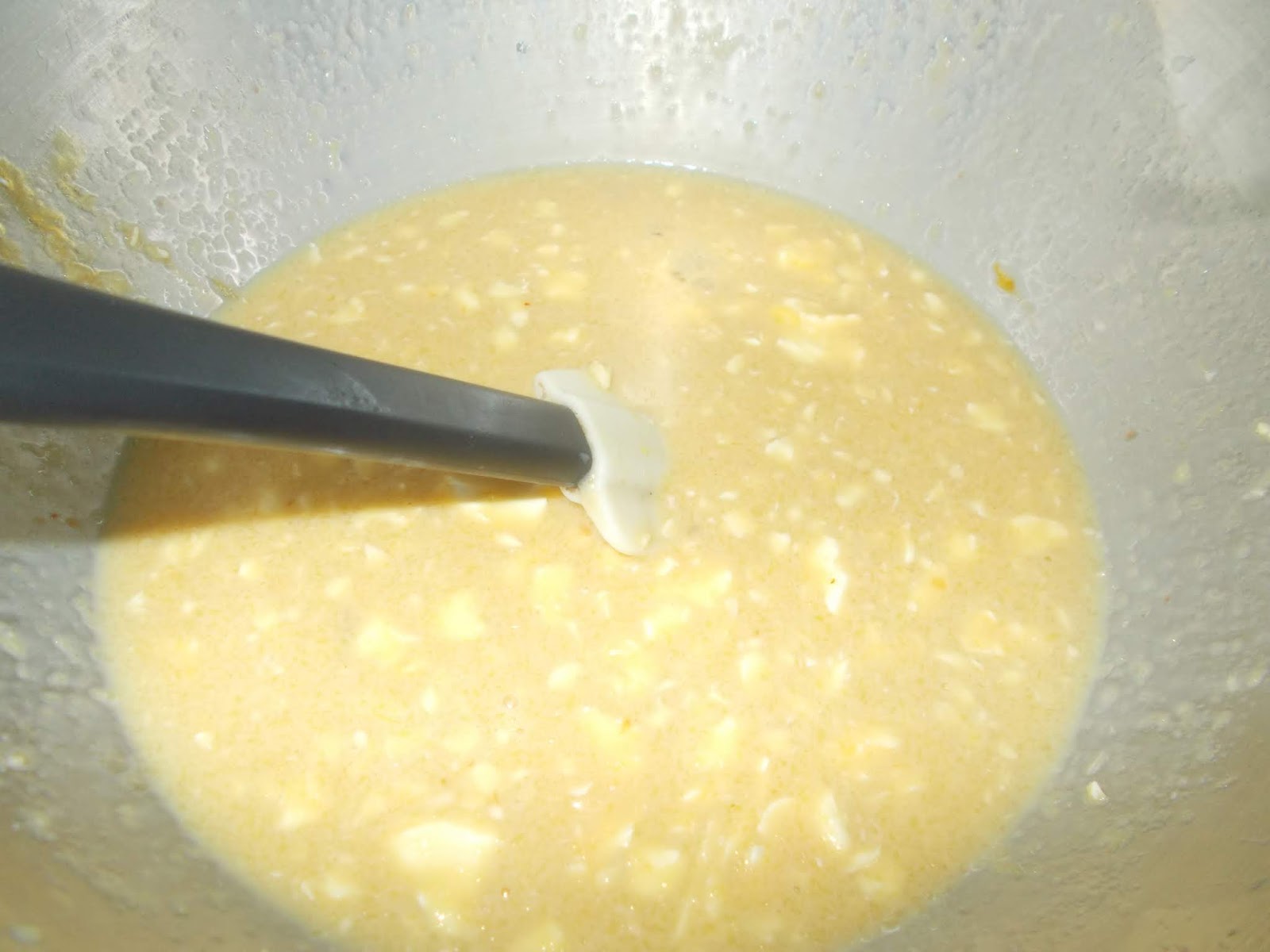
also beat in ;
1 cup milk
3 Tablespoons butter or margarine, melted
( looks kinda of yucky right now, right)
stir in 1 cup canned pork and beans( weird ingredient right ,that's what it calls for)

combine the wet with the dry

spoon into the prepared muffin tin
Bake for 15-20 minutes or
until toothpick inserted in middle come comes out clean

let cool for 5-7 minutes on wire rack.
brush tops with Maple Syrup glaze
cool completely!
Maple Syrup Glaze
makes 2/3 cup
1/2 cup powdered sugar
1 Tablespoon maple syrup
1 Tablespoon butter or margarine, melted
In a small bowl, combine the sugar ,syrup and butter
,blending until smooth.
Brush over muffins hot from oven
Enjoy!
Subscribe to:
Posts (Atom)